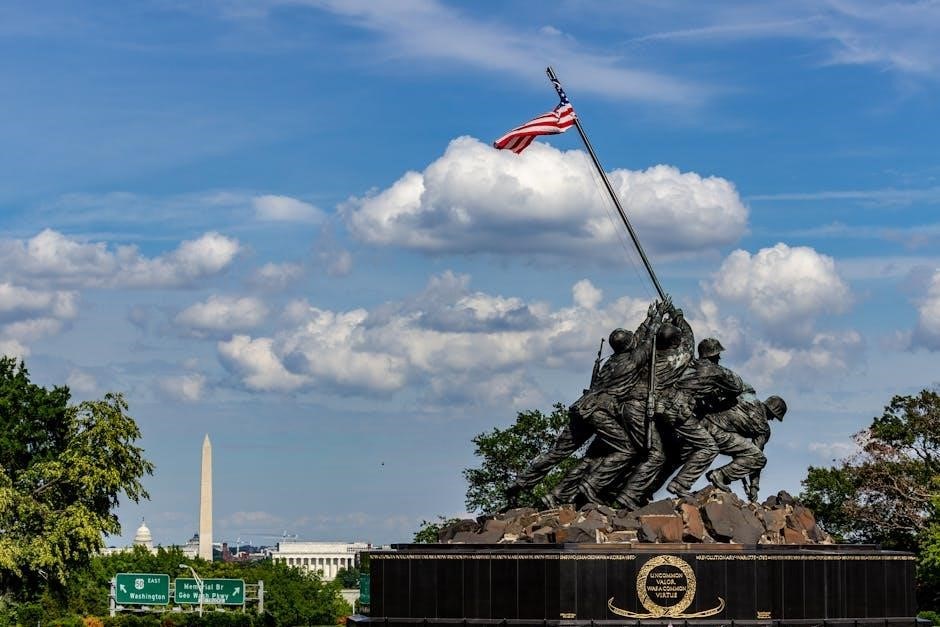
Marine Corps Awards Manual: A Comprehensive Plan
This manual details the policies and procedures for all Marine Corps awards‚ referencing key publications like SECNAVINST 1650.1F and MCO 1650.19 for guidance.
Marine Corps awards represent official recognition of exceptional performance‚ dedication to duty‚ and significant contributions by Marines and units. These honors aren’t merely symbolic; they embody the Corps’ core values of honor‚ courage‚ and commitment. Understanding the framework governing these awards is crucial for both those recommending and receiving them.
The system ensures fairness‚ consistency‚ and adherence to established standards. Proper administration‚ detailed in publications like MCO 1650.19‚ is paramount. Awards acknowledge individual achievements‚ unit successes‚ and prolonged faithful service‚ bolstering morale and reinforcing the high standards expected of every Marine. This introduction sets the stage for a comprehensive exploration of the Marine Corps awards program.
Purpose of the Awards Manual
This manual serves as the definitive guide for all personnel involved in the Marine Corps awards process. Its primary purpose is to establish clear‚ consistent policies and procedures for recommending‚ approving‚ and presenting awards. It ensures compliance with governing directives‚ including SECNAVINST 1650.1F‚ and provides detailed guidance on eligibility criteria‚ documentation requirements‚ and proper display of awards as outlined in MCO P 1020.34.
Furthermore‚ the manual aims to standardize award citations‚ promoting accuracy and meaningful recognition. By centralizing information‚ it streamlines the process‚ minimizes errors‚ and reinforces the value placed on meritorious service within the Marine Corps. It’s a vital resource for maintaining the integrity of the awards system.
Historical Overview of Marine Corps Awards
The tradition of recognizing valor and service within the Marine Corps dates back to its inception. Early forms of commendation were often informal‚ evolving over time into a more structured system. Following major conflicts‚ like World War II and the Korean War‚ the need for standardized awards became apparent‚ leading to the development of formalized regulations.
Key milestones included the establishment of the Navy and Marine Corps Achievement Medal and the Combat Action Ribbon‚ acknowledging a broader range of contributions. Subsequent revisions‚ guided by SECNAVINST 1650.1F and MCO 1650.19‚ refined criteria and procedures‚ reflecting the changing nature of warfare and Marine Corps operations. This historical progression underscores the enduring commitment to recognizing excellence.
Key Publications Governing Awards
Essential directives—SECNAVINST 1650.1F‚ MCO 1650.19‚ and MCO P 1020.34— provide comprehensive guidance on Marine Corps awards‚ eligibility‚ and proper display.
SECNAVINST 1650.1F: The Foundation
SECNAVINST 1650.1F serves as the cornerstone document for all awards within the Department of the Navy‚ including the Marine Corps. It establishes the fundamental policies and principles governing the recognition of exceptional performance and service. This instruction details the types of awards authorized‚ eligibility criteria‚ and the overall framework for a consistent and equitable awards program.
Crucially‚ it outlines the responsibilities of various commands and personnel involved in the awards process‚ ensuring adherence to established standards. The instruction emphasizes compliance with all applicable laws and regulations pertaining to military awards. Furthermore‚ it provides guidance on the proper documentation and submission procedures for award recommendations‚ forming the basis for subsequent‚ more detailed guidance found in MCO 1650.19.
MCO 1650.19: Detailed Guidance
Marine Corps Order (MCO) 1650.19 expands upon the foundational policies outlined in SECNAVINST 1650.1F‚ providing comprehensive and detailed guidance specifically for Marine Corps awards. This order delves into the specifics of each award‚ clarifying eligibility requirements‚ award criteria‚ and appropriate levels of authority for approval. It serves as the primary reference for personnel involved in recommending‚ processing‚ and presenting awards within the Corps.
MCO 1650.19 also addresses procedures for new award proposals‚ outlining the chain of command through which recommendations must be submitted‚ along with the necessary justification and proposed criteria. It reinforces the importance of compliance with all relevant laws and regulations‚ ensuring the integrity and fairness of the awards system. Detailed information regarding ribbon order of precedence is also found within this crucial document.
MCO P 1020.34: Uniform Regulations & Display
Marine Corps Order P (Provisional) 1020.34 is the definitive guide concerning the proper wear and display of awards on Marine Corps uniforms. This publication meticulously details the correct placement of ribbons‚ medals‚ and devices‚ ensuring uniformity and adherence to established standards. It clarifies regulations regarding the simultaneous wear of multiple awards and provides specific guidance on the arrangement of the ribbon bar‚ including the crucial order of precedence.
MCO P 1020.34 also addresses the proper use of devices – such as stars‚ numerals‚ and oak leaf clusters – which denote additional achievements or periods of service. It’s essential for all Marines to consult this order to guarantee their uniform reflects accurate and authorized award displays‚ maintaining a professional and respectful appearance. Referencing this alongside SECNAVINST 1650.1F and MCO 1650.19 is vital.

Types of Marine Corps Awards
Marine Corps awards encompass personal‚ unit‚ and service recognition‚ including the Navy and Marine Corps Achievement Medal‚ Combat Action Ribbon‚ and Marine Corps Reserve Medal.
Personal Awards
Personal awards recognize the exceptional achievements and contributions of individual Marines. These decorations are presented for demonstrated heroism‚ meritorious service‚ or outstanding performance of duty. Notable examples include the Navy and Marine Corps Achievement Medal‚ awarded for significant accomplishments‚ and the Combat Action Ribbon‚ signifying active participation in combat operations.
Furthermore‚ Air Medals‚ though awarded prior to November of a certain year (details specified in governing publications)‚ also fall under this category. Eligibility criteria and specific requirements for each personal award are meticulously outlined in SECNAVINST 1650.1F and MCO 1650.19‚ ensuring consistent and equitable recognition across the Corps. Proper documentation‚ utilizing Form 1650/3‚ is crucial for all nominations.
Navy and Marine Corps Achievement Medal
The Navy and Marine Corps Achievement Medal (NAM) is a prestigious award recognizing meritorious service or outstanding accomplishments. It’s bestowed upon personnel demonstrating a high degree of initiative‚ courage‚ or professional excellence. This medal bridges the gap between service ribbons and higher-level commendations‚ acknowledging significant contributions that don’t necessarily warrant a larger award.
Eligibility requires performance exceeding routine expectations‚ often involving substantial benefit to the Marine Corps or the Department of the Navy. Recommendations are submitted via Form 1650/3‚ requiring detailed justification and supporting documentation. SECNAVINST 1650.1F and MCO 1650.19 provide comprehensive guidance on criteria and proper procedures for nomination and approval.
Combat Action Ribbon
The Combat Action Ribbon (CAR) is awarded to Marines who actively participated in ground combat operations. Specifically‚ it recognizes engagement with the enemy under hazardous conditions‚ signifying direct involvement in a hostile environment. This ribbon isn’t simply for being in a combat zone‚ but for actively participating in combat activities.
Eligibility requires actual combat exposure‚ facing imminent peril due to enemy action. The CAR is a testament to a Marine’s courage and dedication under fire. Proper documentation‚ submitted via Form 1650/3‚ is crucial for verification of qualifying combat exposure. Referencing SECNAVINST 1650.1F and MCO 1650.19 ensures adherence to the established criteria and procedures for awarding this significant recognition.
Air Medals (Awarded Prior to November…)
Air Medals awarded prior to November 2007 represent a distinct period of criteria and authorization within the Marine Corps awards system. These awards typically recognized single acts of heroism or outstanding achievement in aerial flight‚ often involving significant risk or operational success. Understanding the historical context is vital when reviewing older award recommendations.
Documentation for these earlier Air Medals may differ from current standards‚ requiring careful examination of original citations and supporting evidence. SECNAVINST 1650.1F and MCO 1650.19 provide guidance on interpreting legacy awards. It’s crucial to verify eligibility based on the regulations in effect at the time the act occurred‚ ensuring accurate and compliant processing of any related requests or inquiries.
Unit Awards
Unit awards recognize collective achievements and exceptional performance by Marine Corps units‚ distinguishing them from individual accolades. These awards acknowledge sustained superior performance‚ valorous conduct in combat‚ or significant contributions to mission accomplishment. Eligibility extends to entire units‚ encompassing all personnel assigned during the qualifying period.
The process for recommending unit awards requires meticulous documentation detailing the unit’s actions‚ impact‚ and adherence to established criteria outlined in MCO 1650.19. Recommendations must demonstrate a clear link between the unit’s efforts and positive outcomes. Proper justification and supporting evidence are paramount for approval‚ ensuring recognition reflects genuine merit and collective dedication to duty.
Service Awards
Service awards acknowledge a Marine’s cumulative years of faithful service and dedication to the Corps. The Marine Corps Reserve Medal is a prominent example‚ utilizing hourglass devices to denote completed service increments. A bronze hourglass signifies 30 years of service‚ while a gold hourglass represents 40 years – simultaneously wearing both denotes a remarkable four decades of commitment.
These awards aren’t solely based on performance‚ but rather on longevity and unwavering dedication. Proper documentation of service time is crucial for eligibility‚ ensuring accurate representation of a Marine’s career. Regulations‚ detailed in MCO 1650.19‚ govern the awarding of these honors‚ emphasizing the importance of recognizing sustained commitment and loyalty to the Marine Corps’ core values.
Marine Corps Reserve Medal & Service Time Denotations (Hourglass Devices)
The Marine Corps Reserve Medal recognizes honorable service within the Marine Corps Reserve component. Crucially‚ service time is denoted by specific hourglass devices affixed to the medal’s ribbon. A bronze hourglass indicates completion of 30 years of qualifying service‚ while a gold hourglass signifies 40 years.
Remarkably‚ a Marine may wear both a bronze and gold hourglass simultaneously‚ demonstrating an exceptional 40 years of dedicated service. These devices aren’t merely decorative; they are official representations of accumulated commitment. Detailed regulations regarding eligibility and proper wear are outlined in relevant publications‚ ensuring accurate and respectful recognition of Reserve Marines’ long-term contributions to the Corps.
Awarding Authority & Procedures
Awarding authority is delegated throughout the chain of command‚ requiring strict compliance with laws and regulations pertaining to military awards and justifications.
Delegated Awarding Authority
The Marine Corps meticulously delegates awarding authority to commanders at various levels‚ ensuring efficient and appropriate recognition of deserving personnel. This delegation is commensurate with rank and responsibility‚ allowing for timely processing of award recommendations. Frocked commanders‚ those selected for promotion but not yet officially promoted‚ may also receive delegated authority‚ provided they present their frocking authorization letter.
However‚ this authority isn’t absolute; All approvals must adhere to established laws and regulations governing military awards. Proper documentation‚ utilizing Form 1650/3‚ is crucial for each recommendation. Commanders are responsible for verifying eligibility‚ ensuring accurate citations‚ and maintaining a thorough understanding of the relevant award criteria outlined in publications like SECNAVINST 1650.1F and MCO 1650.19.
Compliance with Laws and Regulations
Strict adherence to all applicable laws and regulations is paramount when recommending and approving Marine Corps awards. Awarding authorities must ensure every nomination fully complies with established guidelines‚ preventing any potential legal or ethical concerns. This includes verifying eligibility criteria‚ accurately documenting justification‚ and avoiding any appearance of bias or favoritism.
Recommendations must align with the intent of the award and reflect genuine meritorious service or achievement. Commanders are responsible for understanding the specific requirements outlined in SECNAVINST 1650.1F and MCO 1650.19. Failure to comply can result in award revocation or disciplinary action. Thorough review and meticulous documentation are essential to maintain the integrity of the Marine Corps awards system.
Chain of Command for New Award Proposals
All Department of the Navy (DON) proposals for establishing a new award must navigate a defined chain of command. This ensures thorough vetting and justification before implementation. Submissions begin with the originating command and proceed upwards‚ gaining endorsements at each echelon. Full justification‚ proposed criteria‚ and eligible personnel details are crucial components of any proposal.
The process demands comprehensive analysis‚ demonstrating the award’s necessity and alignment with existing recognition programs. Proposals must clearly articulate how the new award fills a gap and enhances morale or performance. Commanders at each level review for compliance and relevance‚ adding their recommendations. This structured approach safeguards against redundancy and ensures awards remain meaningful and impactful within the Marine Corps.

Ribbon Order of Precedence
Correct ribbon placement is vital; the order reflects significance and is governed by SECNAVINST 1650.1F‚ MCO 1650.19‚ and MCO P 1020.34.
Determining Correct Ribbon Placement
Establishing the proper sequence for ribbons is crucial for demonstrating respect and adherence to Marine Corps standards. Ribbons are arranged based on a defined order of precedence‚ ensuring uniformity across all personnel. This order isn’t arbitrary; it reflects the relative significance of each award.
Referencing publications like SECNAVINST 1650.1F‚ MCO 1650.19‚ and MCO P 1020.34 is essential for accurate placement. These documents provide detailed guidance‚ including specific arrangements for devices denoting additional achievements. Understanding that devices must be worn in a prescribed manner is paramount.
Incorrect placement can diminish the impact of the awards and reflect poorly on the Marine’s attention to detail. Careful study of the governing instructions is therefore a necessity for all Marines.
Devices and Their Significance
Devices affixed to Marine Corps ribbons aren’t merely decorative; they hold substantial meaning‚ signifying specific accomplishments or levels of participation. These additions denote further recognition beyond the base award itself‚ highlighting exceptional service or bravery. Understanding their proper application is vital for accurate representation.
For instance‚ the Marine Corps Reserve Medal utilizes hourglass devices to indicate cumulative service time. A gold hourglass represents 30 years of service‚ while a combination of gold and bronze signifies 40 years.
Referencing SECNAVINST 1650.1F‚ MCO 1650.19‚ and MCO P 1020.34 provides detailed specifications for each device and its corresponding meaning. Correct placement and adherence to regulations are paramount to ensure accurate and respectful display of these honors.
Armed Forces Reserve Medal Placement
The Armed Forces Reserve Medal’s placement within the ribbon order of precedence is carefully defined by governing regulations‚ ensuring uniformity and respect for all decorations. It’s crucial to consult current directives‚ specifically SECNAVINST 1650.1F‚ MCO 1650.19‚ and MCO P 1020.34‚ for the most accurate guidance.
Generally‚ the medal is positioned according to its precedence level relative to other awards. Proper display includes adherence to specified mounting guidelines and ensuring ribbons are correctly spaced and aligned.
Understanding the significance of each ribbon’s position demonstrates respect for the service and sacrifices of those honored. Incorrect placement can diminish the impact of these well-deserved recognitions‚ so diligent attention to detail is essential.
Forms and Documentation
Essential forms like the 1650/3 award recommendation are critical‚ alongside detailed appendices providing ribbon specifics and sample citations for accurate submissions.
Form 1650/3: Award Recommendation Form
The Form 1650/3 serves as the cornerstone of the Marine Corps awards process‚ meticulously documenting the justification for each nomination. This crucial document requires comprehensive details regarding the service member’s actions‚ clearly outlining how their contributions exceed standard expectations and warrant recognition.
Proper completion necessitates a detailed narrative describing the specific act‚ achievement‚ or heroic conduct being recommended. Supporting documentation‚ such as eyewitness statements or official reports‚ significantly strengthens the submission.
The form demands precise information‚ including the nominee’s full name‚ rank‚ and unit assignment‚ alongside the specific award being requested. Accuracy and completeness are paramount to ensure efficient processing and avoid delays. A thorough review by the chain of command is essential before final submission.
Appendix A to Chapter 2: Ribbon Details
This appendix provides a comprehensive visual and descriptive guide to each authorized Marine Corps ribbon‚ ensuring accurate identification and proper wear. Detailed specifications cover ribbon dimensions‚ color patterns‚ and material composition‚ crucial for procurement and replacement.
Each ribbon entry includes a high-resolution image for easy comparison‚ alongside a concise explanation of the award’s significance and eligibility criteria. This resource clarifies distinctions between similar ribbons‚ preventing misidentification.
Furthermore‚ it outlines the correct placement of associated devices‚ such as numerical stars or “V” devices‚ denoting multiple awards or valorous conduct. Understanding these nuances is vital for maintaining a neat and regulation-compliant uniform appearance‚ reflecting pride and professionalism.

Appendix B to Chapter 2: Sample Citations
This appendix offers illustrative examples of well-written award citations‚ serving as a template for nominators. These samples demonstrate the level of detail and clarity required to justify an award recommendation effectively. Each citation highlights specific achievements and contributions‚ linking them directly to the award’s criteria.
Examples cover a range of awards‚ from the Navy and Marine Corps Achievement Medal to combat-related decorations‚ showcasing appropriate language and formatting.
Guidance is provided on emphasizing quantifiable results and demonstrating the nominee’s impact on unit effectiveness or mission accomplishment. These models assist in crafting compelling narratives that clearly articulate the merit of the individual or unit being recognized‚ ensuring a thorough and persuasive submission.

Eligibility and Timeframes
Specific awards have defined eligibility periods and procurement processes; consult Appendixes C and E for detailed examples and timelines regarding award applications.
Eligibility Periods for Specific Awards
Determining eligibility for Marine Corps awards requires careful attention to specified timeframes and criteria. Each award possesses unique stipulations regarding the period during which qualifying actions must occur to be considered for recognition. For instance‚ certain combat awards necessitate actions within a defined operational period‚ while service awards correlate directly with years of honorable service.
Understanding these timelines is crucial for accurate award recommendations. The manual’s appendices‚ particularly Appendix E‚ provide detailed breakdowns of eligibility periods for numerous awards. Commanders and awards personnel must consult these resources to ensure compliance and prevent processing delays. Failing to adhere to these time constraints can result in disqualification‚ even if the nominee demonstrably meets all other criteria. Proper documentation and adherence to established deadlines are paramount.
Award Procurement Information
Securing physical awards—medals‚ ribbons‚ and devices—follows a specific procurement process outlined within the Marine Corps Awards Manual. Units do not independently order awards; instead‚ requests are submitted through established supply channels. Appendix D to Chapter 2 details the necessary procedures and forms for requisitioning awards‚ ensuring accountability and proper inventory control.
The process involves submitting a completed award request to the designated supply officer‚ who then initiates the procurement action. Lead times for award fulfillment can vary depending on availability and demand. Units must factor these timelines into award ceremonies and presentations. Accurate forecasting of award needs is essential to avoid delays and ensure timely recognition of deserving Marines. Proper documentation is vital throughout the procurement process.
Appendix C to Chapter 2: Further Citation Examples
This appendix provides illustrative examples of well-crafted award citations‚ serving as templates for nominators. Effective citations clearly articulate the Marine’s specific achievements and contributions‚ going beyond simply listing duties performed. They highlight exceptional performance‚ initiative‚ and dedication to duty‚ demonstrating the impact of the Marine’s actions.
Examples showcase varying levels of achievement‚ from commendations for sustained superior performance to recognition for heroic actions in combat. Citations should be concise‚ yet comprehensive‚ using strong action verbs and avoiding jargon. They must accurately reflect the Marine’s contributions and align with the criteria for the specific award being recommended. Refer to Appendix B for additional examples and guidance on citation writing.