
Youth football drills are crucial for skill development, emphasizing safety and age-appropriate techniques․ Resources, including PDF guides, are vital for coaches seeking structured training plans․
Effective drills build fundamental skills, promote teamwork, and foster a love for the game, while prioritizing player well-being and positive coaching methods․
Importance of Age-Appropriate Drills
Employing age-appropriate drills in youth football is paramount for optimal development and injury prevention․ Younger players possess differing physical and cognitive abilities compared to older athletes; therefore, drills must be tailored accordingly․ Complex schemes or overly strenuous activities can lead to frustration, poor technique, and a heightened risk of injury․
PDF resources often categorize drills by age group, providing coaches with readily available, developmentally sound exercises․ These guides emphasize fundamental skill acquisition – throwing, catching, running, and tackling – using simplified instructions and modified equipment․ For instance, introducing tackling with the “kneeling tackle” drill, as seen in available resources, prioritizes form and safety over aggressive contact for younger players․
Furthermore, age-appropriate drills foster a positive learning environment, building confidence and enthusiasm for the sport․ Focusing on fun and engagement, rather than solely on competition, encourages long-term participation and a genuine love for football․ Utilizing PDF drill collections ensures coaches have access to proven methods aligned with youth athletic development principles․
Safety Considerations in Youth Football
Prioritizing safety is non-negotiable in youth football․ Proper technique, equipment checks, and concussion awareness are fundamental․ PDF drill resources frequently incorporate safety protocols, emphasizing controlled environments and progressive skill development to minimize risk․
Coaches must be trained in recognizing and responding to injuries, including heat exhaustion and dehydration․ Drills should be modified based on weather conditions and player fatigue․ PDF guides often include warm-up and cool-down routines designed to prepare muscles and prevent strains․
Furthermore, teaching proper tackling techniques – like the “kneeling tackle” – is crucial to reduce head injuries․ Equipment must fit correctly and be maintained regularly․ Emphasizing sportsmanship and respect for opponents also contributes to a safer playing environment․ Accessing comprehensive PDF drill manuals ensures coaches are equipped with the knowledge to implement safe and effective training sessions, fostering a positive and secure experience for young athletes․

Fundamental Drills for All Positions

Essential drills build core skills like agility, speed, and coordination, forming the foundation for all players․ PDF resources offer structured plans for comprehensive development․

Warm-up and Agility Drills
Prioritizing a dynamic warm-up is paramount before any youth football practice․ These drills prepare muscles for activity, reducing injury risk and enhancing performance․ Simple exercises like high knees, butt kicks, and arm circles are excellent starting points;
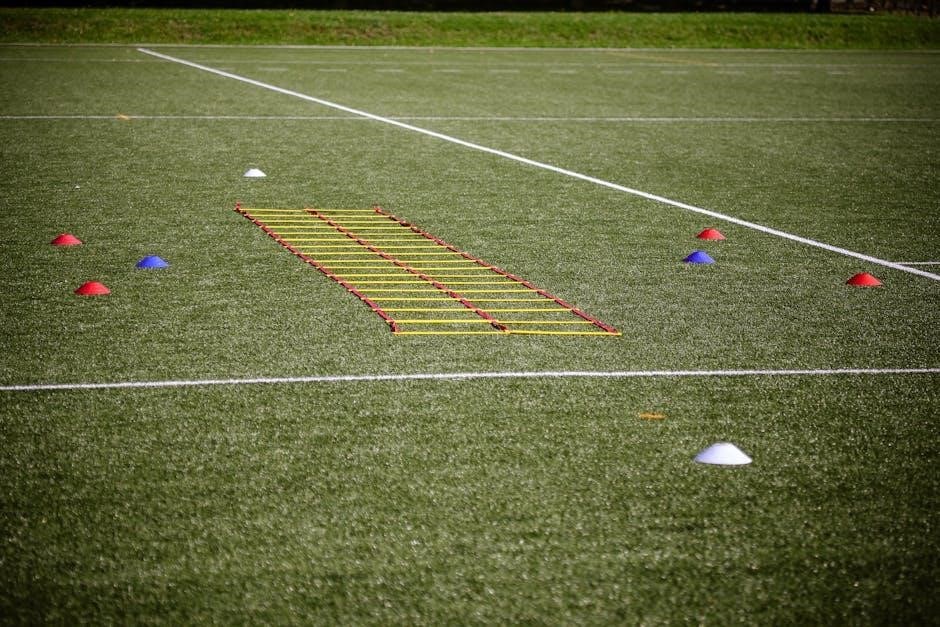
Agility drills are equally vital, focusing on quick changes of direction and footwork․ Cone drills, shuttle runs, and ladder drills improve coordination and responsiveness․ Many PDF resources detail specific agility courses tailored to different age groups and skill levels․
A well-structured warm-up should gradually increase heart rate and blood flow, followed by agility work that challenges players’ movement skills․ Coaches can find numerous drill variations online and in downloadable PDF guides, ensuring a diverse and engaging practice session․ Remember to emphasize proper technique and controlled movements throughout․
Conditioning Drills for Youth Players
Youth football conditioning must focus on building endurance and stamina without overexertion․ Short, interval-based drills are more effective than long-distance running for this age group․ Shuttle sprints, incorporating rest periods, are a great starting point․
Hill sprints, when available, provide a challenging yet manageable workout․ Coaches should emphasize proper form to prevent injuries․ Many PDF resources offer age-specific conditioning programs, outlining appropriate drill durations and repetitions․
Remember to integrate conditioning into football drills, rather than treating it as a separate activity․ For example, running routes at game speed builds both conditioning and skill․ Downloadable PDF guides often include combined drills․ Prioritize fun and engagement to maintain player motivation, and always monitor players for signs of fatigue․

Position-Specific Drills
Position-specific drills refine individual skills, enhancing player performance․ PDF resources provide detailed plans for each position, from linemen to quarterbacks, fostering expertise․

Youth Football Linebacker Drill: Mirror Dodge
The Mirror Dodge drill is excellent for developing linebacker agility, footwork, and reaction time․ This drill focuses on a linebacker’s ability to stay in front of a ball carrier, mirroring their movements․ A coach or player acts as the “ball carrier,” initiating lateral movements – shuffles, crossover steps, and quick changes of direction․
The linebacker must maintain a proper athletic stance and mirror the movements of the “ball carrier” within a designated area (typically 5-10 yards)․ PDF resources often illustrate variations, including adding a finish component where the linebacker “tackles” the ball carrier (using proper form, of course!)․
Progressions can include increasing the speed of the movements, adding a ball for the “ball carrier” to protect, or incorporating a read-and-react element․ This drill builds crucial skills for reading offensive intentions and making quick, decisive plays․ Proper coaching emphasizes maintaining a low center of gravity and quick, choppy steps․
Youth Football Tackling Drill: Kneeling Tackle
The Kneeling Tackle drill is a foundational exercise for teaching safe and effective tackling technique to young players․ It removes the speed element, allowing focus on proper form – head up, eyes on the target, wrapping arms, and driving through with the legs․ Players begin in a kneeling position, facing a partner who presents a tackling dummy or pad․

The tackler practices wrapping their arms around the target, keeping their head up and driving forward․ PDF coaching guides frequently detail the importance of avoiding head contact and emphasizing shoulder-to-chest contact․ This drill builds muscle memory for correct tackling mechanics․
Progressions involve gradually increasing the distance and adding a slight forward lean․ Coaches should continually reinforce proper technique and safety protocols․ This drill is a critical first step before introducing more dynamic tackling drills, ensuring a solid foundation for safe and effective play․
Youth Football Lineman Drill: Drive Blocks
The Drive Block drill focuses on developing fundamental offensive line skills – stance, footwork, hand placement, and generating power․ Linemen begin in a three- or four-point stance, practicing a quick first step and driving forward with short, choppy steps․ Emphasis is placed on maintaining a low center of gravity and keeping the back straight․
Coaches utilize tackling dummies or sleds as targets, instructing players to deliver a powerful block using their hands inside the opponent’s frame․ Many PDF resources highlight the importance of hand positioning and leg drive․ Proper technique prevents penalties and maximizes blocking effectiveness․
Drill variations include angle blocks and double-team blocks, progressively increasing complexity․ Safety is paramount; coaches should ensure proper form and supervise closely․ Mastering the drive block is essential for establishing a strong running game and protecting the quarterback․
Quarterback Drills: Passing Accuracy
Developing passing accuracy in young quarterbacks requires consistent practice focusing on mechanics and target acquisition․ Drills begin with short, quick throws to receivers at varying distances, emphasizing a tight spiral and proper follow-through․ Footwork is crucial; quarterbacks practice stepping into their throws with balanced strides․
Many PDF coaching guides detail drills like the “Five Spot” drill, where quarterbacks rotate through different throwing angles and distances․ Another effective drill involves throwing to stationary targets (cones or tires) to refine precision․ Coaches should emphasize reading defenses and making quick decisions․
Progressive drills introduce movement and pressure, simulating game-like scenarios․ Accuracy drills aren’t just about arm strength; they’re about repetition, technique, and building confidence․ Consistent practice, guided by structured drills, builds a solid foundation for future success․
Receiver Drills: Route Running and Catching
Effective receiver drills focus on precise route running – sharp cuts, controlled acceleration, and understanding spacing․ Young receivers benefit from cone drills to practice agility and footwork, mastering techniques like slants, outs, and curls․ Emphasis is placed on creating separation from defenders․
Catching drills are equally vital, starting with soft hands and secure grip․ PDF coaching resources often include partner drills where receivers focus on tracking the ball and making catches in traffic․ Drills progress to catching passes while running routes, simulating game situations․
Coaches should stress the importance of hand-eye coordination and concentration․ Drills like the “Gauntlet” – receivers running through a line of defenders attempting to deflect passes – build toughness and focus․ Route running and catching are intertwined; mastery of both is essential for receiver success․
Running Back Drills: Agility and Ball Security
Developing agility is paramount for youth running backs․ Cone drills, shuttle runs, and ladder drills enhance footwork, quickness, and change-of-direction skills․ These drills simulate the cuts and movements required to navigate a defense effectively․ Coaches should emphasize a low center of gravity and explosive steps․
However, agility is useless without secure ball handling․ PDF coaching guides highlight the importance of “high and tight” ball security – keeping the ball close to the body, covering the tip, and protecting it from potential fumbles․ Drills involve carrying the ball through contact, practicing proper arm positioning, and reacting to simulated tackles․
Partner drills where backs must maintain ball security while navigating obstacles are beneficial․ Reinforcing the habit of protecting the ball is crucial, as turnovers can quickly change game momentum․ A combination of agility and ball security drills builds confident, effective running backs․

Advanced Drills & Skill Development
Advanced drills, often found in PDF resources, integrate multiple skills and game scenarios․ These focus on teamwork, communication, and applying learned techniques under pressure․
Combination Drills: Integrating Multiple Skills
Combination drills represent a significant step in youth football development, moving beyond isolated skill practice․ These drills, frequently detailed in comprehensive PDF coaching guides, intentionally blend several football fundamentals into a single, fluid sequence․ For example, a drill might start with a quick receiver route, transition into a precise quarterback throw, and conclude with a running back securing the catch and demonstrating agile footwork to evade a ‘defender’․
The purpose is to mimic the dynamic, multi-faceted nature of a real game situation․ Players learn to react instinctively, combining skills like passing, catching, blocking, and tackling without hesitation․ This approach enhances cognitive processing alongside physical ability․ Coaches can find numerous examples categorized by position and skill level within available PDF resources, allowing for tailored practice plans․ These drills build football IQ and prepare players for the complexities of game play․
Game Situation Drills: Applying Skills in Context
Game situation drills bridge the gap between practice and live play, demanding players utilize learned skills under pressure․ These drills, often found detailed in PDF coaching manuals, recreate common football scenarios – a third-and-long pass play, a goal-line stand, or a two-minute drill․ They emphasize decision-making, adaptability, and execution within a dynamic environment․
Unlike isolated skill work, these drills require players to read defenses, adjust routes, make quick throws, and react to evolving circumstances․ A PDF resource might outline a drill simulating a kickoff return, requiring the entire special teams unit to execute their assignments flawlessly․ The focus shifts from how to perform a skill to when and why to use it․ This contextualized training builds confidence and prepares young athletes for the unpredictable nature of a football game, fostering strategic thinking and teamwork․
Drills Focusing on Teamwork and Communication
Youth football isn’t solely about individual athleticism; it’s a team sport demanding seamless communication and collaboration․ Drills specifically designed to foster these qualities are readily available in many PDF coaching resources․ These exercises move beyond individual skill refinement, emphasizing synchronized movements, clear verbal cues, and mutual support․
Examples include blindfolded blocking drills, where offensive linemen rely entirely on verbal communication to execute their assignments, or defensive back coverage drills requiring constant dialogue to adjust to receiver routes․ A PDF might detail a “circle drill” where players rapidly pass a ball while calling out assignments, reinforcing quick thinking and clear communication under pressure․ These drills cultivate trust, accountability, and a shared understanding of game strategy, ultimately enhancing on-field performance and building a cohesive team dynamic․

Resources for Youth Football Drills (PDFs)
PDF resources offer coaches structured youth football drills, covering all positions and skill levels․ Online platforms provide access to diagrams, videos, and detailed coaching guides․
Finding Reliable Drill Resources Online
Locating trustworthy online resources for youth football drills, often available as PDF downloads, requires careful consideration․ Numerous websites claim to offer effective training plans, but quality varies significantly․ Prioritize resources from established football organizations, coaching associations, or reputable sports training websites․
Look for drills that clearly outline setup instructions, coaching points, and safety precautions․ Diagrams and accompanying videos are incredibly valuable for understanding proper technique․ Be wary of resources lacking detail or promoting potentially unsafe practices․ Many coaching communities share PDF drill books and resources through online forums and social media groups – these can be excellent sources, but always vet the information․
Consider resources that cater specifically to the age and skill level of your players․ A drill appropriate for older, more experienced athletes may be too complex or dangerous for younger beginners․ Regularly updating your drill library with fresh, innovative ideas is also beneficial, ensuring players remain engaged and challenged․